Role
Senior Product Designer
Year
2022-2025
Duration
6 months
Context / Problem
Splitwise was a free expense-tracking app with $90B+ in shared transactions and almost no revenue. After shipping Splitwise Pay, the first native payment feature, the next problem was immediate: users were still entering every expense by hand.
Manual expense entry was the ceiling on engagement, and an app that felt like a to-do list wasn't going to drive the habitual use that grows a subscription revenue stream.
What I Did
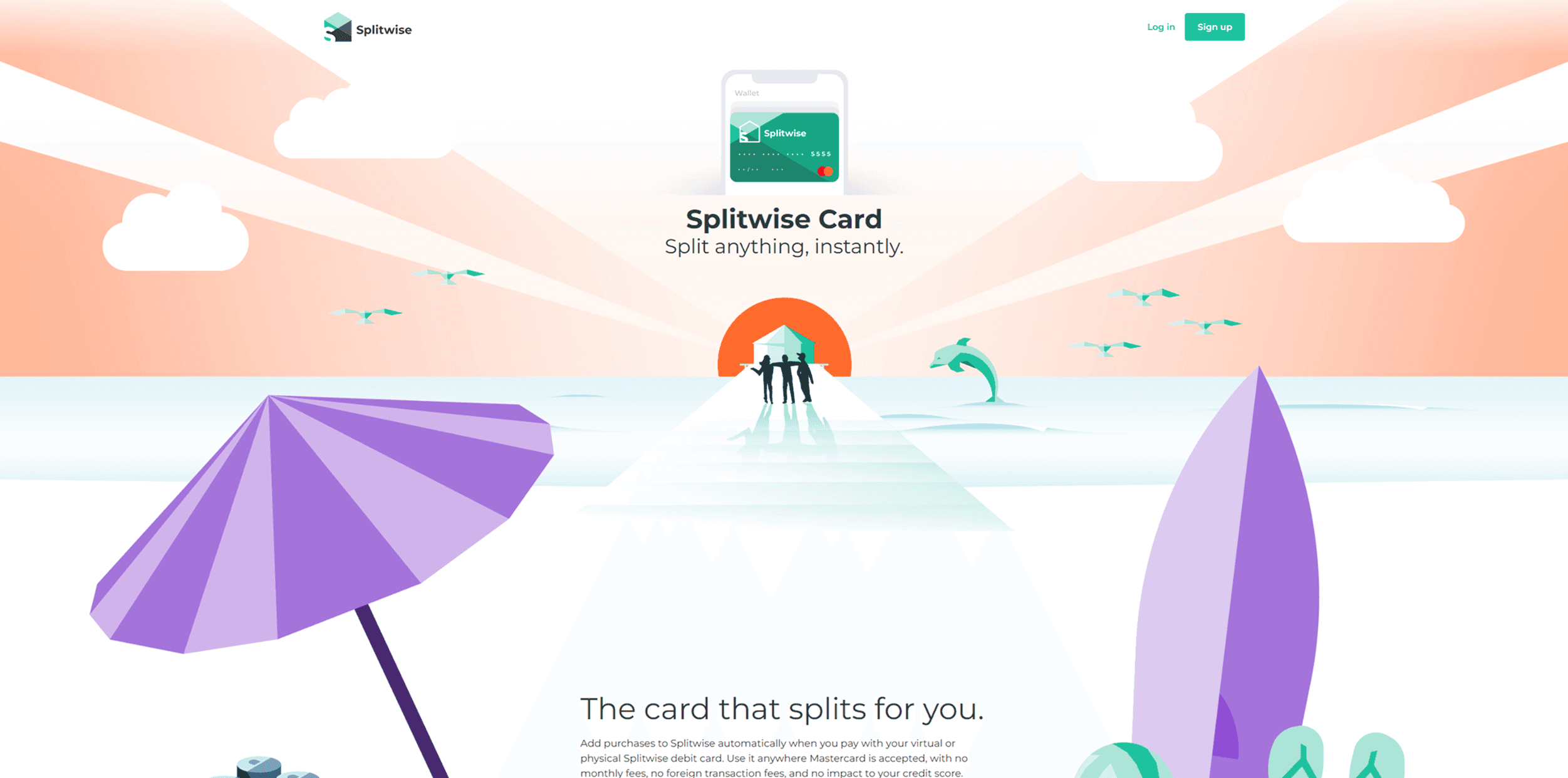
I led design on Splitwise Card, a debit card that would automatically log and split purchases.
Early research showed users were hesitant to replace existing cards for one with no rewards, so I worked with the team to set a clear threshold before launch: if Card didn't hit its revenue target, we'd pivot.
When the numbers came in below that threshold, I moved to Transaction Import, a Splitwise Pro feature that let users connect any existing card via Plaid and auto-split transactions by group or category, without changing how they already spend.
Impact
Transaction Import turned Splitwise from a tool users remembered to open into one that ran in the background. It became the #2 driver of Splitwise Pro subscriptions after launch, behind only a daily expense cap.
Splitwise Pay solved the settle-up problem: users could now pay each other inside the app without switching to Venmo. But the model had room to expand. Users only opened Splitwise when they remembered to, and every expense still had to be entered manually.
The 20–30% of users who came back regularly were also the ones doing the most data entry.

What was at stake
A user who opens Splitwise once a month generates one settle-up. A user whose card is connected generates one every time they spend.
Converting occasional users into habitual ones was the path to growing Splitwise Pro, the app's paid subscription tier. That wasn't going to happen as long as opening the app felt like a chore.
Imagine you're Tommy, and you're sharing a house with roommates. Tommy's name is on the lease.
He fronts rent every month, pays the utilities each on a different due date, and handles anything else the house needs: a cleaning service, a new appliance, a repair. His roommates will pay him back. But first, Tommy has to log every transaction.
If he opens Splitwise each time a bill hits, it interrupts his day. If he waits until the end of the month, he's reconstructing weeks of spending from memory: amounts, dates, who owes what percentage. Either way, it's another task on Tommy's list.
The insight wasn't that Tommy wanted to stop splitting expenses. He wanted to stop thinking about it. The manual entry step was what stood between Splitwise being a tool he used and Splitwise being infrastructure he trusted.
Phase 1 — Splitwise Card (free)
The first solution was Splitwise Card, a debit card that automatically logged every purchase and split it into an assigned group. I designed the full card experience, including the physical card mailer.
The compliance challenge was immediate: users kept calling it a credit card. It was a debit card drawing from a Splitwise wallet balance, with no rewards. I addressed this with a one-pager shown before onboarding that explicitly explained what the card was and wasn't, and a fast onboarding flow for users who already had Splitwise Pay.
Research surfaced the real risk early: users were hesitant to get a card just for splitting, especially one with no rewards. When I presented this, the team launched with a pre-agreed threshold: if adoption didn't hit target, we'd shift to Transaction Import.

Pivot — Transaction Import (Splitwise Pro)
When card numbers came in below target, the plan kicked in.
Transaction Import changed the proposition entirely. Instead of asking users to replace their card, it met them where they already were: connect the card you have, keep your rewards, and let Splitwise handle the splitting.
I designed a transaction list UI so users could act on real charges instead of recalling them from memory, a quick-split button to assign any transaction to a group in one tap, and customizable split ratios with preset defaults per group.

A planned pivot
Splitwise Card launched first. Adoption came in below the target threshold, but this wasn't a surprise.
My early research had flagged that users were hesitant to replace a rewards card just for automatic splitting, which led the team to set a clear threshold before launch: if Card didn't hit its revenue target, we'd pivot. When the numbers came in, the plan executed cleanly.
Transaction Import became the #2 driver of Splitwise Pro subscriptions
The pivot changed the proposition entirely. Meet users where they already are, don't ask them to change their behavior. Transaction Import became the #2 driver of Splitwise Pro subscriptions after launch.
The #1 driver was a daily expense cap on free accounts, which worked but generated significant user backlash. Transaction Import grew subscriptions without that friction. For connected-card users, manual entry was largely eliminated and Splitwise ran in the background.